
 Facebook
 X
X
 Pinterest
 Copy Link
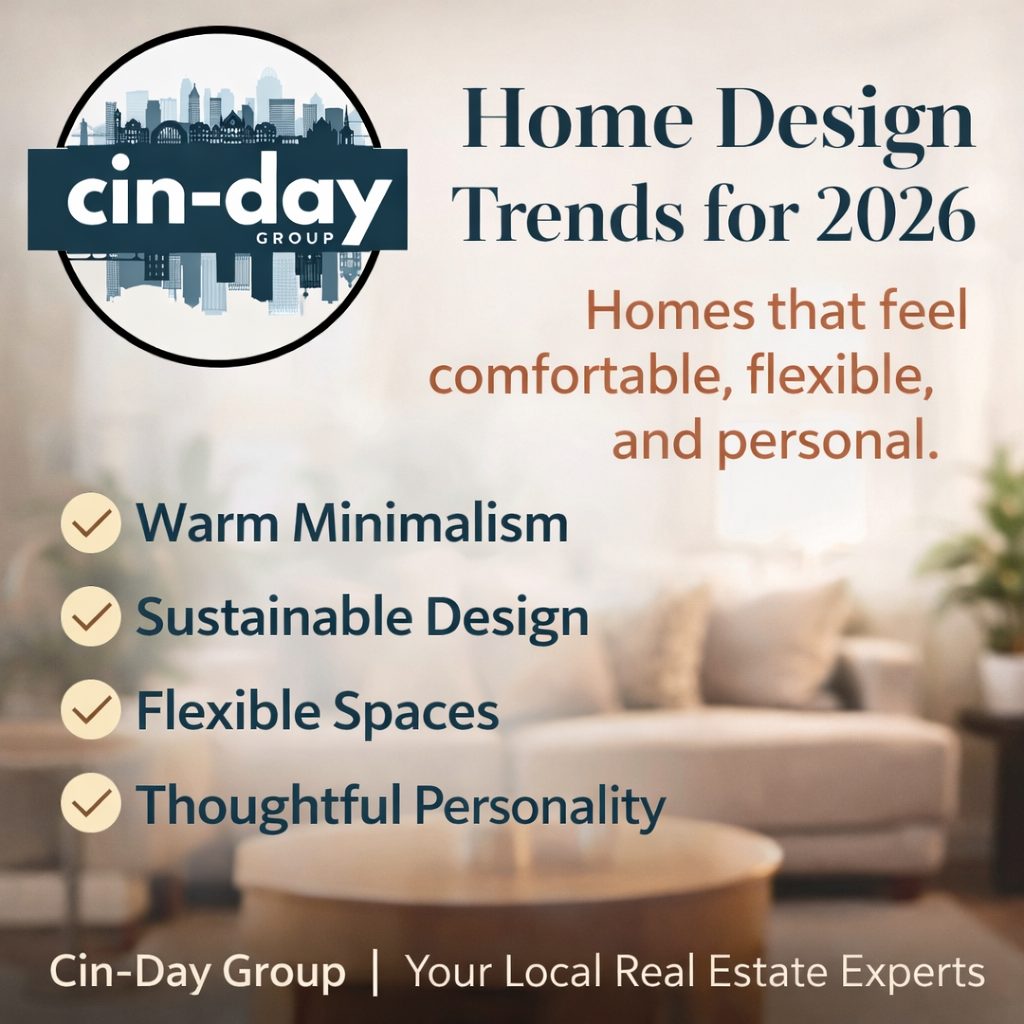
After walking through countless homes year after year, you start to notice when something really shifts. And heading into 2026, the shift is clear: homes are no longer designed just to impress—they’re designed to support everyday life.
The biggest home design trends for 2026 aren’t flashy or over-the-top. They’re thoughtful. They focus on comfort, flexibility, and creating spaces that feel good to come home to. Whether you’re planning a renovation, thinking about selling down the road, or just love keeping up with design, here’s what I’m seeing—and why it matters from a real estate perspective.
Homes Are Feeling Warmer and More Inviting
For years, bright white walls and ultra-modern finishes dominated design. While clean lines are still popular, homes in 2026 are softening up.
Spaces feel warmer, more layered, and more human. Natural wood tones, textured walls, gentle curves, and creamy neutrals are replacing stark finishes. Instead of feeling like a showroom, homes feel lived-in—in the best way.
From a buyer’s perspective, this is huge. People don’t just want to see a house anymore; they want to imagine unwinding there, hosting friends, and living real life. Warm, approachable design makes that connection easier.
Sustainability Is Simply Expected Now
Not long ago, energy-efficient features were considered upgrades. In 2026, they’re part of the baseline.
Buyers are paying closer attention to how homes are built and how they function long term. Energy-efficient windows, better insulation, low-toxicity finishes, and durable materials aren’t just good for the environment—they’re good for monthly expenses and overall comfort.
What I hear most often from buyers is this: they want homes that make sense. Sustainable design checks that box by offering healthier indoor spaces and lower operating costs, all while holding long-term value.
Spaces Are Designed to Be Flexible
Life doesn’t fit neatly into one-purpose rooms anymore, and homes are finally reflecting that.
In 2026, rooms are designed to adapt. Dining areas double as workspaces. Guest rooms function as home offices. Storage is built in thoughtfully so everyday clutter doesn’t take over.
From a real estate standpoint, flexible homes tend to appeal to more buyers. A layout that works for a remote worker, a growing family, or someone downsizing feels like a safer investment—and that confidence shows when it’s time to make an offer.
Personality Is Making a Comeback (In a Smart Way)
After years of playing it safe, homeowners are starting to express themselves again—and buyers are responding.
That doesn’t mean loud or overwhelming design. Instead, personality shows up in intentional moments: a bold light fixture, a richly painted office, custom shelving, or patterned tile in a smaller space.
These touches make a home memorable without limiting its appeal. The key in 2026 is balance—design that feels personal but still allows buyers to imagine making it their own.
Wellness Is Influencing Design More Than Ever
One of my favorite trends is how much wellness is shaping home design.
Homes are being laid out to maximize natural light. Bathrooms feel more spa-like. Quiet corners for reading, stretching, or decompressing are becoming more common. Even subtle choices—like softer lighting and calming color palettes—can completely change how a home feels.
Buyers may not label this as “wellness design,” but they absolutely notice when a home feels peaceful and balanced.
Smart Homes, Without the Tech Overload
Technology is still very much part of home design in 2026—but it’s far more subtle.
Instead of visible gadgets everywhere, smart features are built quietly into the home. Climate control, lighting, and energy monitoring work behind the scenes. Charging stations are tucked away. Everything feels seamless rather than overwhelming.
Buyers appreciate convenience, but they also want homes that won’t feel dated in a few years. This quieter approach to technology strikes that balance.
What This Means for Homeowners and Sellers
You don’t need to do a full renovation to align with 2026 design trends. Often, it’s the smaller updates—paint choices, lighting, finishes, or rethinking how a space is used—that make the biggest difference.
Homes that feel warm, flexible, and thoughtfully designed tend to photograph better, show better, and stick in buyers’ minds long after a showing ends.
A Final Thought from a Local Real Estate Perspective
Design trends tell us a lot about how people want to live. In 2026, buyers are choosing homes that feel comfortable, efficient, and personal—not overly trendy or overly perfect.
If you’re wondering which updates make sense for your home, or how today’s design trends could impact your home’s value in your local market, I’m always happy to help you think it through.
Reach out to the Cin-Day Group for honest advice, local insight, and guidance that helps you feel confident—whether you’re updating your home, preparing to sell, or planning your next move.


